
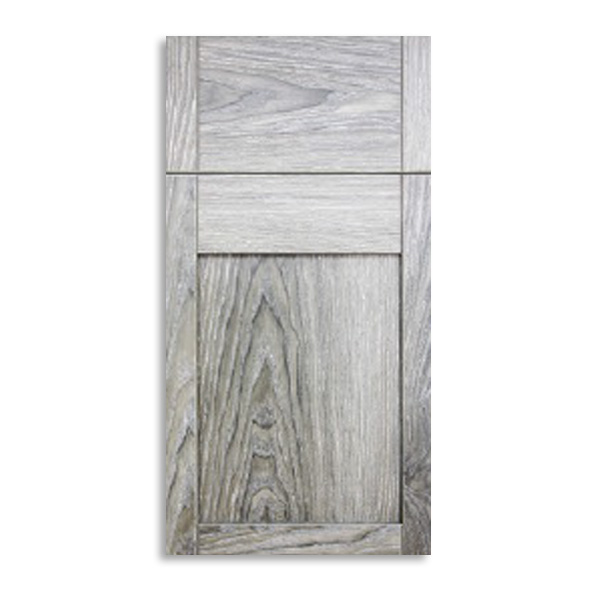
Genesis Weathered Oak (Frameless Shaker) – Sample Door
$35.00
The Genesis Weathered Oak (Frameless Shaker) – Sample Door from GoBravura Cabinetry combines the timeless charm of shaker design with a modern frameless construction and a durable, matte weathered oak finish, offering a sophisticated yet functional solution for any kitchen or bathroom.
Order Genesis Weathered Oak Frameless Shaker Cabinets: Shop Now
Show mapHide mapLocations to be confirmed
Product shipping locations
0 location records
Locations assigned to this product. Confirm stock, shipping origin and pickup availability before visiting.
Shared addresses are grouped under one pin. Positions marked approximate show the nearby area. Use the address links for directions.
Brand colors — 0 brands
Show warrantyHide warrantyCoverage & claims
Confirm warranty coverage for this specific product. Cabinet warranties may not apply to flooring, countertops, fixtures, samples or other accessories.
Manufacturer terms and exclusions apply. Keep your invoice, item numbers and photos. Shipping damage and return requests follow the separate claims process.
Confirm warranty coverage for this specific product. Cabinet warranties may not apply to flooring, countertops, fixtures, samples or other accessories.
Manufacturer terms and exclusions apply. Keep your invoice, item numbers and photos. Shipping damage and return requests follow the separate claims process.
Weathered Oak Frameless Shaker Sample Door is a physical reference for deciding whether the Genesis Weathered Oak finish belongs in a specific project. SKU GB-GWOF-SD is categorized as a sample door. Its most useful role is to reveal color, gray-to-brown balance, pattern movement, sheen, profile, and relationships with real floors, counters, paint, tile, metals, and nearby wood tones under the light that will exist in the finished room.
A weathered-oak look can shift between taupe, brown, gray, beige, or cooler and warmer impressions depending on its surroundings. The sample should therefore be evaluated through a repeatable calibration process, not approved from a single product photo. Use neutral references, labeled lighting conditions, side-by-side material comparisons, and a written scorecard so the final decision can be explained and reproduced.
Weathered Oak Frameless Shaker Sample Door is not a complete cabinet. It does not independently verify cabinet-box construction, shelves, drawers, hinges, glides, assembly, storage access, performance, certifications, warranty, inventory, or delivery. Those facts must come from the current exact cabinet SKU and order record.

Build a Weathered Oak Frameless Shaker Sample Door Test Kit
Prepare the comparison before moving through the room. A consistent kit helps separate the cabinet finish itself from the changing materials around it.
- Neutral controls: Include clean white, warm white, middle gray, beige, and black references.
- Project paint: Use large, fully dried samples of every wall or trim color visible beside the cabinetry.
- Counter and tile: Include pieces large enough to show background color, veining, pattern, and grout.
- Flooring: Use several boards or tiles so grain, variation, seams, and direction are visible.
- Metals: Add actual hardware, faucet, lighting, and appliance-finish samples when possible.
- Existing woods: Include a removable drawer, shelf, furniture sample, or accurate material reference from connected rooms.
- Documentation: Bring a camera, location labels, time labels, and a score sheet.
Keep the kit together while testing. Changing one comparison material at a time can hide a conflict that appears only when the complete palette is assembled.
Test 1: Map Gray, Brown, and Taupe Undertones
Weathered Oak Frameless Shaker Sample Door should first be compared with neutral controls. Place it beside clean white to expose warmth, beside middle gray to reveal brown or taupe, and beside beige to show whether it becomes cooler. Black can help clarify overall value and contrast.
Write observations as relationships rather than universal color labels. Useful notes include “warmer than the floor,” “grayer under the window,” “more taupe beside the counter,” or “stronger contrast against the white wall.” A statement such as “this finish is gray” is less useful because the apparent color can shift with light and surroundings.
- Place all references on the same vertical plane.
- Stand back to normal room-viewing distance.
- Repeat the comparison near each planned cabinet run.
- Record unexpected red, green, yellow, or violet influence.
- Note whether the finish looks quiet, contrasted, or nearly matched beside each neutral.
If observers use different words, ask them to rank relative warmth, lightness, and contrast instead. Numbers and direct comparisons reduce confusion created by subjective color names.
Test 2: Standardize Daylight and Evening Reviews
Daylight changes with window direction, hour, weather, season, exterior reflection, and shade position. Artificial light changes with bulb color, fixture placement, dimming, and reflected materials. A reliable review includes both.
- Place the sample vertically at the approximate cabinet location.
- Review it in morning, midday, late afternoon, and after dark.
- Use the blinds, shades, and dimmer settings normally expected in the room.
- Observe it from entries, work areas, seating locations, and connected rooms.
- Photograph every condition from the same marked position.
- Label each image with room, wall, date, time, and light sources.
A phone camera automatically changes exposure and white balance, so photographs are evidence of relative differences rather than absolute color. Include the neutral references in the frame. Judge the final appearance while looking at the physical sample, then use the labeled photographs to compare conditions later.
Test 3: Compare Existing Woods Without Chasing a Near Match
A weathered-oak cabinet finish often shares a room with wood flooring, beams, furniture, stair parts, shelving, or doors. Two wood looks do not need to match exactly, but their temperatures, value ranges, grain scale, and movement should relate intentionally.
Place the Weathered Oak Cabinet Door Sample directly beside each important existing wood. Evaluate four relationships:
- Temperature: Is one clearly warmer, cooler, redder, grayer, or more yellow?
- Lightness: Are the materials distinctly light and dark, or close enough to look like a failed match?
- Pattern scale: Does one have broad movement while the other has fine or busy grain?
- Direction: Will long grain lines compete when viewed across the room?
Clear contrast can be easier to coordinate than an almost-match. If the floor and cabinet are too close but visibly different, use a counter, rug, wall color, or other material to separate them. Do not rely on the word “oak” to establish compatibility; finish names are not standardized color specifications and do not prove species or construction.
Test 4: Read Pattern Movement at Project Scale
Weathered Oak Frameless Shaker Sample Door shows one small portion of the visible pattern. Review it at arm’s length and from across the room. Note whether movement feels linear, varied, quiet, or pronounced. Then consider how repetition may read across a full elevation.
A sample cannot predict the placement of every line or tonal shift in a production order. It can help identify the general visual language and whether the surrounding palette should be quieter. If the cabinet finish carries noticeable movement, pair it carefully with strongly veined stone, high-variation tile, and active wood flooring.
- Turn the sample through different viewing angles to study reflection and movement.
- View it beside a larger counter piece rather than a tiny swatch.
- Compare horizontal and vertical orientation for context, while remembering the production orientation must be verified.
- Sketch or print an elevation and place the sample beside it to estimate visual weight.
- Review current collection imagery for broader context without treating renderings as exact color proof.
Test 5: Establish a Clear Material Hierarchy
A coherent palette needs a leading surface and supporting materials. Decide whether the weathered-oak finish, countertop, backsplash, floor, or another feature will carry the strongest movement. Use the Weathered Oak Frameless Shaker Sample Door to test that hierarchy.
- Countertop: Compare both the background field and the most prominent vein or aggregate.
- Backsplash: Review tile color, size, surface variation, layout, and grout as one visual system.
- Floor: Consider the repeated area, seams, orientation, and relationship to existing woods.
- Paint: Test wall and trim colors on the planes where they will appear.
- Metals: Compare warm, cool, dark, and mixed-metal options directly against the finish.
- Appliances: Include stainless-colored, black, white, or panel-ready surfaces that border cabinet fronts.
If the counter contains dramatic movement, quieter tile and flooring can protect the cabinet’s pattern from competition. If the backsplash is intended as the focal point, use the sample to choose a counter and paint that connect the cabinet finish without adding another dominant pattern.
Test 6: Review Open-Plan Sightlines and Color Echoes
Weathered Oak Frameless Shaker Sample Door may look balanced within a kitchen but disconnected from a dining room, living area, hallway, or stair seen at the same time. Move the sample to every major sightline and compare it with fixed elements in adjoining spaces.
Look for useful color echoes rather than exact repetition. A taupe note may connect to upholstery, a gray note to stone, a brown note to furniture, or a dark line to metal accents. Limit the number of repeated cues so the result feels deliberate.
- Stand at each entry and seated viewpoint.
- Check the finish beside continuous flooring that crosses room boundaries.
- Compare nearby built-ins, doors, beams, and furniture.
- Observe how wall colors between rooms alter the apparent cabinet tone.
- Decide where the weathered finish should begin and end architecturally.
If another cabinet finish appears nearby, assign each finish a clear room, wall, level, or function. Random alternation can turn two intentional colors into visual noise.
Test 7: Score the Weathered Oak Frameless Shaker Sample Door
A weighted scorecard turns impressions into a comparable decision. Rate the Weathered Oak Cabinet Door Sample from 1 to 5 in each category, then multiply by the project’s importance weight.
| Decision factor | Suggested weight | Questions |
|---|---|---|
| Undertone compatibility | 25% | Does it work with counter, floor, paint, and adjoining woods? |
| Day-to-night stability | 20% | Is the finish acceptable in every normal lighting condition? |
| Pattern balance | 15% | Does its movement support rather than compete with other surfaces? |
| Open-plan connection | 15% | Does it relate to visible adjoining rooms? |
| Profile and scale | 10% | Do the visible geometry and proportions fit the design direction? |
| Hardware relationship | 10% | Do the preferred metals and sizes work visually? |
| Team confidence | 5% | Can every decision-maker approve the same physical comparison? |
Adjust weights to match the project. A renovation with existing wood floors may give undertone compatibility more weight. A windowless room may prioritize artificial-light performance. Keep written reasons beside the numbers so a close result can be reviewed intelligently.
Mock Up Hardware and Metal Finishes Safely
Place actual pulls or knobs on the Weathered Oak Frameless Shaker Sample Door using a removable, non-marking method that is safe for the surface. Do not drill unless the sample is owned, modification is permitted, and any applicable return process will not be affected.
Compare hardware length, shape, finish, and visual weight. A long pull creates a stronger line; a small knob leaves more of the pattern visible; a backplate adds contrast. Test warm metals, stainless-colored finishes, and dark options in the complete material group.
The sample can show visual scale, but it cannot prove final operating clearance. Use exact cabinet and hardware dimensions to confirm placement, door and drawer movement, appliance conflicts, and accessibility.
What the Sample Can and Cannot Establish
Genesis Weathered Oak Sample Door can support observations about the physical item in hand:
- apparent color and undertone in tested conditions;
- visible pattern, texture, sheen, profile, and edge treatment;
- relationships with actual project materials;
- the visual scale of proposed decorative hardware;
- whether Genesis Weathered Oak remains a finish candidate.
It cannot independently establish complete-cabinet construction or performance. Do not use it as proof of cabinet-box material, shelf thickness, drawer construction, hinge or glide type, soft-close operation, storage access, assembly format, weight limits, whole-cabinet water resistance, scratch or impact performance, certification, warranty, inventory, lead time, or delivery.
The current GoBravura Genesis Weathered Oak family page provides manufacturer context for the cabinet family. Family information still must be mapped to the exact CabinetryStock SKU; it should not be rewritten as a feature of the sample door itself.
Create a Finish Approval Record
When the sample passes review, create a simple approval record:
- Write the full product name and SKU GB-GWOF-SD.
- Attach labeled daylight and evening photographs.
- List every counter, tile, grout, floor, paint, appliance, and metal product tested.
- Include the completed weighted scorecard and decision notes.
- Record the approved hardware candidate without treating mockup placement as final.
- Have required decision-makers review the same physical material group.
- Retain the record with the measured plan, elevations, quote, and cabinet order.
If production imagery or received fronts appear materially different from the approved sample, use the seller’s current process to request clarification before distributing or installing products.
Move from Sample Approval to Exact Cabinet Selection
After the Genesis Weathered Oak Sample Door is approved, review current options in the Genesis Weathered Oak Frameless Shaker Cabinets collection. Build the order from field measurements and exact item records.
For every cabinet, verify SKU, dimensions, configuration, quantity, materials, included components, adjacent-item compatibility, panels, fillers, trim, appliance clearances, fulfillment format, current availability, and current timing. Finish approval does not replace functional planning.
Frequently Asked Questions
What is the Genesis Weathered Oak Sample Door used for?
Use it to evaluate the visible finish, undertones, pattern, sheen, profile, edges, hardware relationship, and compatibility with real project materials before choosing full cabinets.
Does “weathered oak” prove the door or cabinets are solid oak?
No. A finish or collection name is not a universal material specification. Confirm materials for the sample and every exact cabinet, panel, filler, drawer, shelf, or accessory from current authoritative information.
How can gray and brown undertones be identified?
Place the sample beside clean white, middle gray, beige, and black controls, then compare it with the actual floor, counter, and paint. Describe relative shifts under labeled daylight and artificial-light conditions.
What if the cabinets and wood floor almost match?
An almost-match can look accidental. Compare temperature, lightness, pattern scale, and direction. Clear contrast or a bridging material may create a more intentional relationship.
Can the sample verify waterproof or scratch-resistant performance?
No performance guarantee should be inferred from visual inspection. Follow current manufacturer care guidance and verify any important performance claim for the exact product in writing.
Does the sample prove drawer, hinge, or cabinet-box features?
No. It is one sample door. Full-cabinet components, materials, operating hardware, and assembly format must be checked at the exact SKU level.
Why use a weighted scorecard?
It converts subjective impressions into a repeatable comparison and lets project priorities influence the decision. Keep written reasons beside each score.
What happens after sample approval?
Complete measured plans and elevations, select exact cabinet SKUs, and confirm dimensions, configuration, materials, included items, compatibility, clearances, fulfillment, availability, timing, receiving, and installation requirements.
A disciplined calibration process makes the Weathered Oak Cabinet Door Sample more useful than a simple color chip. Test undertones, nearby woods, pattern movement, lighting, sightlines, and hardware; document the result; then let current exact-cabinet records control the construction and ordering decisions.
| Weight | 5 lbs |
|---|---|
| Dimensions | 15 × 11 × 1 in |
Related products

Aspen White – Sample Door
$35.00
Coffee Shaker – Sample Door
$35.00
Midnight Blue – Sample Door
$35.00

%20–%20Sample%20Door&url=https://cabinetrystock.com/product/genesis-weathered-oak-frameless-shaker-sample-door/&media=https://cabinetrystock.com/wp-content/uploads/2026/03/Genesis-Weathered-Oak.jpg)


%20–%20Sample%20Door&url=https://cabinetrystock.com/product/aspen-white-sample-door/&media=https://cabinetrystock.com/wp-content/uploads/2026/03/Aspen-White.jpg)


