
Shaker Navy Blue Capital Impressions Collection – Assembled Cabinets
ASSEMBLEDPrice range: $4.13 through $1,118.12
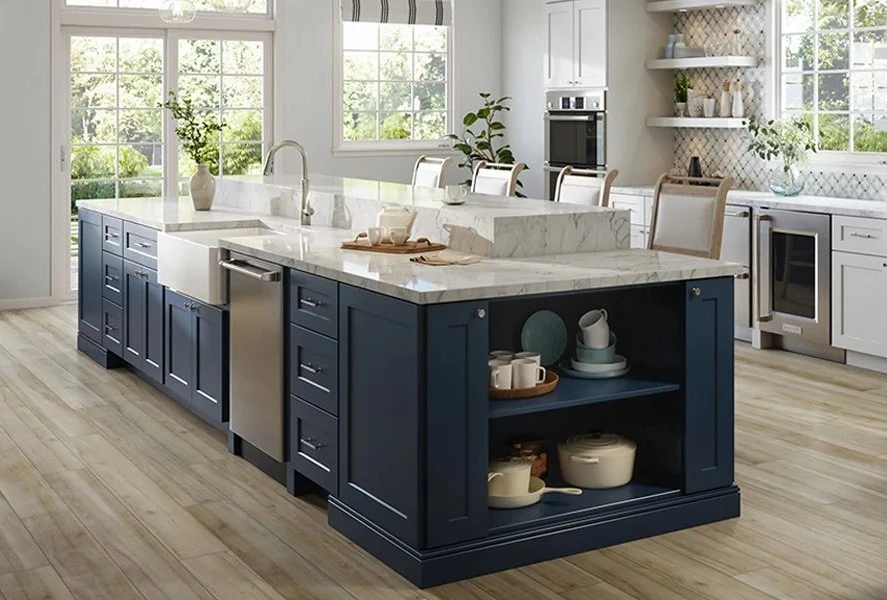
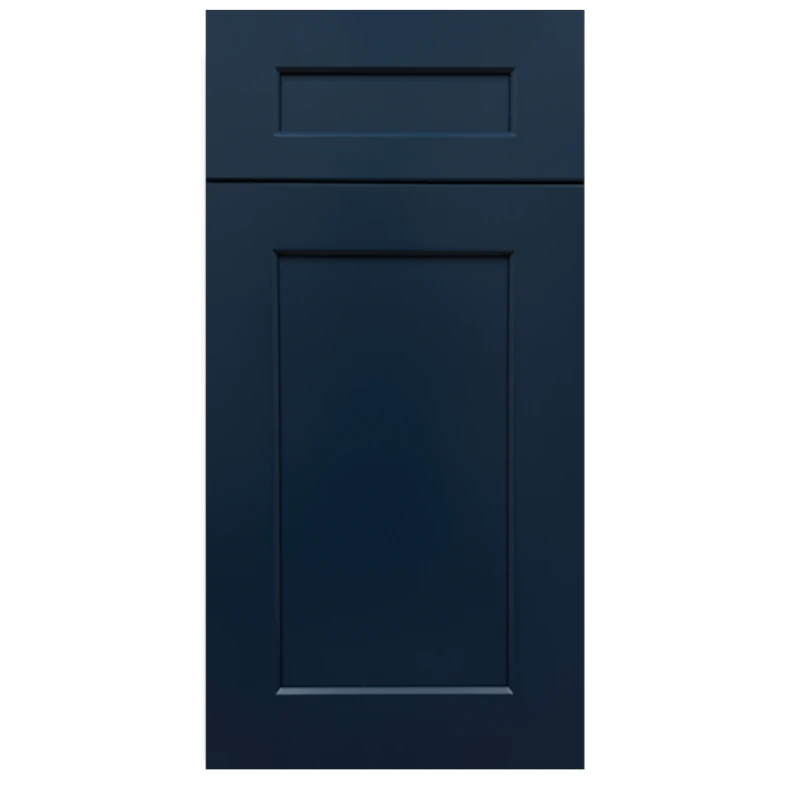
Shaker Navy Blue Capital by US Cabinet Depot combines a saturated navy finish with familiar Shaker geometry and an assembled cabinet format. The variable A-USCD-SNB-ALL family is listed under Assembled Cabinets and Assembled US Cabinet Depot. Its dark color can create a strong architectural foundation, but successful planning depends on deliberate color massing, real-light sample review, accurate measurements, exact-item verification, and a receiving route sized for complete cabinet units.
The Shaker Navy Blue Capital Impressions Collection pairs decorative depth with a color that can appear inky, blue-gray, cool, or slightly green as its surroundings change. Rather than treating navy as a minor accent, evaluate how much of it will be visible from the room’s entries, work areas, seating positions, and adjacent spaces. Counters, backsplash, flooring, paint, lighting, appliances, and decorative metals should be reviewed as one composition.

Plan Shaker Navy Blue Capital by Color Mass and Sightline
Shaker Navy Blue Capital works best when its visual weight is mapped on the wall elevations before products are ordered. Color mass refers to the amount and placement of a strong finish within the viewer’s field of vision. A full navy wall, a group of tall cabinets, a lower-cabinet zone, or a defined architectural feature will each affect the room differently.
- Full-room application: Use light, texture, and surrounding surfaces to keep the room balanced from every viewpoint.
- Lower-cabinet zone: Compare the navy with the flooring below and countertop edge above because both define its boundaries.
- Tall-cabinet area: Review the complete elevation so one concentrated block does not feel disconnected from the remaining room.
- Two-color layout: Give each cabinet color a clear wall, level, or functional role rather than alternating finishes without a pattern.
- Connected rooms: Stand in adjacent spaces and check whether the navy repeats or conflicts with nearby colors and furnishings.
Create simplified wall elevations with the dark cabinet areas filled in. Then view those elevations in the order a person will experience the room: entry, primary work area, seating position, and exits into adjacent spaces. This sightline exercise can reveal an unbalanced tall section or isolated patch of color before it becomes part of the order.
Dark cabinetry does not automatically make a compact room feel too heavy. The result depends on placement, natural and artificial light, lighter wall areas, and the contrast supplied by counters or backsplash. Preserve visual breathing room by distributing tall elements intentionally and avoiding several large dark surfaces that merge without a boundary.
Test Shaker Navy Blue Capital Under the Room’s Real Lighting
Navy is highly responsive to light. Direct daylight may make the blue character more visible, while low or warm illumination can push the finish toward charcoal or black. Cooler light may reveal blue-gray or green-leaning undertones. Review a current sample, when available, during morning, afternoon, and evening conditions.
- Window light: Move the sample near each major window because direction and reflected surroundings can change its appearance.
- Ceiling fixtures: Check whether the planned general lighting reaches cabinet faces, corners, and tall sections evenly.
- Task lighting: Evaluate the finish beneath fixtures planned for counters, sinks, and appliance work zones.
- Raking light: View light traveling across the fronts to see how the Shaker bevel and recessed panel create shadow.
- Evening conditions: Test the complete palette when daylight is no longer supporting the room.
Build one portable sample board containing the cabinet finish, countertop, backsplash, grout, flooring, wall paint, appliance finish, and proposed decorative metal. Move the board through the room and review it from normal standing and seated positions. A counter or paint color that appears compatible by itself may reveal an unwanted undertone once placed directly beside navy.
Layered lighting is more useful than relying on one bright central fixture. General light supports movement, task light serves work areas, and selective accent light can help define architectural features. Fixture placement and beam direction should be coordinated with cabinet elevations so important work surfaces are not left in shadow.
Coordinate Counters, Backsplash, Flooring, and Metals
The Shaker Navy Blue Capital Impressions Collection can support classic, transitional, or more tailored interiors depending on the surrounding choices. Establish a hierarchy: choose one leading patterned surface, one or two supporting textures, and a controlled group of colors. This allows the navy cabinetry and Shaker profile to remain visible without forcing every material to be plain.
- Light countertops: Warm white, cream, or softly patterned surfaces can define work areas against the dark cabinet color.
- Dark countertops: Charcoal or black surfaces can create a dramatic direction but require intentional lighting and visible boundaries.
- Backsplash: Quiet tile can brighten the wall area, while patterned tile should be tested against the repeated Shaker geometry.
- Grout: A contrasting joint becomes a repeated graphic line; related grout gives tile a quieter overall appearance.
- Flooring: Choose enough separation to keep the cabinet base visible instead of allowing it to merge into a similarly dark floor.
- Natural accents: Warm or light-toned textures can soften the deep blue without attempting an exact color match.
Decorative metal selection changes the navy’s character. Brass, bronze, and copper-colored accents can add warmth. Nickel or stainless-colored details may feel crisper. Black can create a low-contrast effect that is quieter but may be less visible against the dark finish. Mock up the intended pull or knob scale and placement before drilling finished fronts, and verify whether decorative hardware is included or purchased separately for each exact item.
Wall paint should be tested directly beside the cabinet sample. Bright white can create sharp contrast, warm white may soften the transition, and saturated wall colors can alter how the navy is perceived. Review the paint with the actual lighting and all major materials rather than choosing from a separate fan deck.
Verified Details for the Shaker Navy Blue Capital Impressions Collection
Current manufacturer and product information identifies the following cabinet construction and operating details for this line:
- Five-piece stained doors.
- A solid birch mortise-and-tenon frame.
- A 45-degree inside bevel around the recessed area.
- A veneered MDF flat recessed center panel.
- A 1/2-inch plywood cabinet box.
- A UV-coated matching cabinet exterior.
- A UV-coated natural cabinet interior.
- Full-extension, undermount, soft-close drawer glides.
- Concealed European-style hinges with soft-close operation.
These facts describe the cabinet line, but individual variations can serve different functions. A standard cabinet, panel, trim item, accessory, or other component may not use every feature in the same way. Review the active product information for the exact SKU rather than applying a standard cabinet description universally across the family.
The official US Cabinet Depot Capital Collection sales sheet provides manufacturer reference material for the broader collection. Use it with the current product variation, measured drawings, purchase documents, and any written clarification retained for the project.
Measure the Room and Build the Cabinet Schedule
Before ordering Shaker Navy Blue Capital, create a field-measured floor plan and wall elevations. Record wall lengths, ceiling height, windows, doors, trim, soffits, plumbing, electrical points, vents, and other fixed conditions. Check dimensions in several places when floors, walls, or ceilings appear uneven. Give every selected cabinet a specific plan location and purpose.
- Measure every wall: Verify current conditions instead of depending entirely on an older drawing.
- Mark fixed services: Record plumbing, electrical, ventilation, switches, outlets, and appliance connections.
- Confirm appliance documents: Use current manufacturer dimensions and required clearances for every selected model.
- Check corner operation: Review cabinet doors, drawers, appliance doors, handles, walls, and perpendicular runs.
- Study opposing runs: Consider circulation while cabinet and appliance doors are open.
- Review sightlines: Evaluate tall cabinets, windows, appliance openings, navy color mass, and lighter wall areas together.
- Create an exact-item schedule: Record each variation, SKU, size, configuration, quantity, and intended location.
Appliance planning should include full dimensions, handles, hinges, ventilation needs, service clearances, and connection locations. A refrigerator, oven, dishwasher, or other appliance can extend beyond its marketed width when open. Confirm that its operation will not conflict with cabinet fronts, walls, islands, or circulation routes.
Fillers, panels, and trim should address measured conditions rather than become last-minute additions. Identify visible ends, corner clearances, depth changes, ceiling transitions, and appliance areas on the drawings. Verify that each finishing component belongs with the selected variation and connect it to a specific plan location.
Verify Every Exact SKU and Variation
The A-USCD-SNB-ALL family is a variable product, so active selection-level information should control purchasing. A family photograph, sales sheet, or related cabinet provides context, but it should not replace the dimensions, configuration, compatibility, and included items attached to the exact selection.
- Identity: Confirm the complete product name, selected variation, SKU, quantity, and plan location.
- Dimensions: Compare current measurements with the floor plan, elevations, appliances, and receiving route.
- Configuration: Verify the cabinet type and any orientation or layout details displayed for the item.
- Included items: Review what accompanies the selection and what may require a separate purchase.
- Compatibility: Check neighboring cabinets, panels, fillers, trim, and accessories individually.
- Finish: Confirm that current imagery or an available sample represents the chosen variation.
- Fulfillment: Recheck current availability and timing immediately before submitting the order.
Do not assume that a related item includes the same parts or uses identical dimensions. If active product information is incomplete or conflicts with another source, request clarification before purchase and retain the response with the approved drawings and item schedule.
Plan the Route for Assembled-Cabinet Receiving
Shaker Navy Blue Capital is listed as assembled cabinetry, so receiving plans should use complete cabinet dimensions. Measure gates, exterior doors, hallways, elevators, stairs, landings, and tight turns between the unloading point and installation area. Consider width, height, depth, and the space required to rotate a tall or wide unit while moving it through the building.
- Doorways: Measure usable openings after accounting for stops, handles, doors, and fixed obstructions.
- Elevators: Confirm interior size, door height, reservations, weight rules, and building procedures.
- Stairs: Check landing depth, overhead clearance, railing locations, and changes in direction.
- Interior routes: Remove movable obstacles and protect completed floors before receiving.
- Staging: Reserve a clean, dry area where cabinets can be grouped by floor-plan location.
Inspect labels and visible packaging promptly. Compare received items with the purchase record before distributing them throughout the project. Retain identifying materials until the order is reconciled, and follow the seller’s current reporting procedure if something appears missing, damaged, or inconsistent.
Availability and lead information can vary by exact selection and order. Confirm current item availability, fulfillment details, destination requirements, and the latest estimate before coordinating installers, appliances, countertops, or other trades. Do not represent a family-level estimate as a guaranteed date.
Care for the Navy Finish and Recessed Details
Begin care with current US Cabinet Depot guidance for the exact finish. Remove routine dust from broad surfaces, bevels, and recessed lines with a clean microfiber cloth or another approved gentle tool. Address minor marks using a lightly dampened cloth and mild cleaner only when permitted by the manufacturer’s instructions.
Test unfamiliar cleaning products in an inconspicuous area. Avoid abrasive pads, harsh solvents, excessive water, oily polish, or products that may alter the stained appearance. Dry cleaned areas promptly and protect cabinet fronts during countertop, appliance, plumbing, painting, and decorative-hardware work.
Frequently Asked Questions
Is Shaker Navy Blue Capital delivered assembled?
Yes. This variable family is categorized under Assembled Cabinets and Assembled US Cabinet Depot. Measure the receiving route using the complete dimensions of the selected units, and verify current fulfillment details for the exact order before coordinating installation or other trades.
What construction details are currently identified?
The listed details include five-piece stained doors, a solid birch mortise-and-tenon frame, a 45-degree inside bevel, a veneered MDF flat recessed center panel, a 1/2-inch plywood box, UV-coated exterior and interior surfaces, soft-close drawer glides, and concealed European-style soft-close hinges.
How can buyers keep navy cabinetry from feeling too dark?
Evaluate color mass on the wall elevations, preserve lighter surfaces where appropriate, and use layered lighting rather than one central fixture. Test the cabinet sample with the actual counters, backsplash, grout, flooring, paint, appliances, and metals under daytime and evening conditions.
Which countertops and backsplashes work with the navy finish?
Both light and dark surfaces can work when undertones, pattern, and lighting are coordinated. Light counters create clearer separation; dark counters produce a more dramatic palette. Let either the counter or backsplash provide the leading pattern so the room retains a clear hierarchy.
Should decorative hardware contrast with the cabinet color?
That depends on the intended design. Warm metals can add visible contrast, nickel can create a cooler tailored effect, and black may appear quieter against navy. Test actual samples for color and scale, and confirm whether decorative hardware is included with each selected item.
What should be confirmed before ordering a variation?
Verify the exact product identity, SKU, size, configuration, quantity, included items, compatibility, finish representation, appliance clearances, receiving access, current availability, and timing. Resolve missing or conflicting information before submitting the purchase.
Browse current products and available variations in the CabinetryStock shop. Real-light sample testing, deliberate navy color massing, accurate wall elevations, exact-SKU review, and assembled-receiving preparation will help turn Shaker Navy Blue Capital into a cohesive cabinet design without relying on unsupported assumptions.
Show mapHide map3 locations
Product shipping locations
3 location records
Locations assigned to this product. Confirm stock, shipping origin and pickup availability before visiting.
Shared addresses are grouped under one pin. Positions marked approximate show the nearby area. Use the address links for directions.
Brand colors — 3 brands
Show warrantyHide warrantyCoverage & claims
The specification book provides limited lifetime coverage for cabinets, hinges and slides for the original residential consumer. Proof of purchase is required and coverage is nontransferable. Removal and installation labor, normal wear, misuse and natural wood characteristics are excluded.
Manufacturer terms and exclusions apply. Keep your invoice, item numbers and photos. Shipping damage and return requests follow the separate claims process.
The specification book provides limited lifetime coverage for cabinets, hinges and slides for the original residential consumer. Proof of purchase is required and coverage is nontransferable. Removal and installation labor, normal wear, misuse and natural wood characteristics are excluded.
Manufacturer terms and exclusions apply. Keep your invoice, item numbers and photos. Shipping damage and return requests follow the separate claims process.
FULL HEIGHT SINGLE DOOR BASES
| Image | Alt Image | SKU | Description | Qty | Price | |
|---|---|---|---|---|---|---|
 | | A-USCD-SNB-BT9 | Full Height Single Door Base 09"W x 34.5"H x 24"D | Original price was: $498.41.$162.68Current price is: $162.68. | ||
| | A-USCD-SNB-B15FH* | Full Height Single Door Base 15"W x 34.5"H x 24"D | Original price was: $1,085.37.$354.27Current price is: $354.27. | ||
| | A-USCD-SNB-B18FH* | Full Height Single Door Base 18"W x 34.5"H x 24"D | Original price was: $1,201.75.$392.25Current price is: $392.25. | ||
| | A-USCD-SNB-B21FH* | Full Height Single Door Base 21"W x 34.5"H x 24"D | Original price was: $1,318.13.$430.24Current price is: $430.24. |
FULL HEIGHT DOUBLE DOOR BASES
| Image | Alt Image | SKU | Description | Qty | Price | |
|---|---|---|---|---|---|---|
| | A-USCD-SNB-B24FH* | Full Height Double Door Base 24"W x 34.5"H x 24"D | Original price was: $1,485.11.$484.74Current price is: $484.74. | ||
| | A-USCD-SNB-B30FH* | Full Height Double Door Base 30"W x 34.5"H x 24"D | Original price was: $1,853.23.$604.90Current price is: $604.90. | ||
| | A-USCD-SNB-B36FH* | Full Height Double Door Base 36"W x 34.5"H x 24"D | Original price was: $2,113.82.$689.95Current price is: $689.95. |
SINGLE DOOR SINGLE DRAWER BASES
| Image | Alt Image | SKU | Description | Qty | Price | |
|---|---|---|---|---|---|---|
| | A-USCD-SNB-B15 | Single Door Single Drawer Base 15"W x 34-1/2"H x 24"D - lD, lDR, lS | Original price was: $767.86.$250.63Current price is: $250.63. | ||
| | A-USCD-SNB-B18 | Single Door Single Drawer Base 18"W x 34-1/2"H x 24"D - lD , lDR, lS | Original price was: $837.43.$273.34Current price is: $273.34. | ||
| | A-USCD-SNB-B21 | Single Door Single Drawer Base 21"W x 34-1/2"H x 24"D - lD, lDR, lS | Original price was: $905.74.$295.64Current price is: $295.64. |
DOUBLE DOOR SINGLE DRAWER BASES
| Image | Alt Image | SKU | Description | Qty | Price | |
|---|---|---|---|---|---|---|
| | A-USCD-SNB-B24 | Double Door Single Drawer Base 24"W x 34-1/2"H x 24"D - 2D, lDR, lS | Original price was: $994.29.$324.53Current price is: $324.53. | ||
| | A-USCD-SNB-B30S | Double Door Single Drawer Base 30"W 34.5"H 24"D | Original price was: $1,205.55.$393.49Current price is: $393.49. |
DOUBLE DOOR DOUBLE DRAWER BASES
| Image | Alt Image | SKU | Description | Qty | Price | |
|---|---|---|---|---|---|---|
| | A-USCD-SNB-B36 | Double Door Double Drawer Base 36"W x 34-1/2"H x 24"D - 2D, 2DR, lS | Original price was: $1,435.78.$468.64Current price is: $468.64. |
SINK BASE DOUBLE DOOR SINGLE DRAWER
| Image | Alt Image | SKU | Description | Qty | Price | |
|---|---|---|---|---|---|---|
| | A-USCD-SNB-SB30S | Sink Base Double Door Single Drawer - 30"W x 34.5"H x 24"D | Original price was: $986.70.$322.06Current price is: $322.06. |
SINK BASES
| Image | Alt Image | SKU | Description | Qty | Price | |
|---|---|---|---|---|---|---|
| | A-USCD-SNB-SB36 | Sink Base - 36"W x 34-1/2"H x 24"D - 2 False Drawers | Original price was: $1,079.05.$352.20Current price is: $352.20. |
FARM SINK BASES
| Image | Alt Image | SKU | Description | Qty | Price | |
|---|---|---|---|---|---|---|
| | A-USCD-SNB-FSB36 | Farm Sink Base - 36"W X 34-1/2"H X 24"D | Original price was: $1,079.05.$352.20Current price is: $352.20. |
TWO DRAWER BASES
| Image | Alt Image | SKU | Description | Qty | Price | |
|---|---|---|---|---|---|---|
| | A-USCD-SNB-2DB30 | Base Cabinet - 30"W x 34.5"H x 24"D | Original price was: $1,514.21.$494.24Current price is: $494.24. |
THREE DRAWER BASES
| Image | Alt Image | SKU | Description | Qty | Price | |
|---|---|---|---|---|---|---|
| | A-USCD-SNB-3DB18 | Drawer Base Cabinet- 18"W x 34-1/2"H x 24"D - 3DR | Original price was: $1,195.43.$390.19Current price is: $390.19. | ||
| | A-USCD-SNB-3DB24 | Drawer Base Cabinet- 24"W x 34-1/2"H x 24"D - 3DR | Original price was: $1,344.70.$438.90Current price is: $438.90. | ||
| | A-USCD-SNB-3DB30 | Drawer Base Cabinet- 30"W x 34-1/2"H x 24"D - 3DR | Original price was: $1,516.74.$495.06Current price is: $495.06. |
BASE EASY REACH
| Image | Alt Image | SKU | Description | Qty | Price | |
|---|---|---|---|---|---|---|
| | A-USCD-SNB-BER33 | Base Easy Reach Cabinet - 33"W x 34.5"H x 24"D | Original price was: $1,184.04.$386.47Current price is: $386.47. | ||
| | A-USCD-SNB-BER36 | Base Easy Reach Cabinet - 36"W x 34.5"H x 24"D | Original price was: $1,308.01.$426.93Current price is: $426.93. |
BASE EASY REACH WITH LAZY SUSAN TRAYS
| Image | Alt Image | SKU | Description | Qty | Price | |
|---|---|---|---|---|---|---|
| | A-USCD-SNB-LSB33* | Base Easy Reach Cabinet - 33"W x 34.5"H x 24"D | Original price was: $1,684.98.$549.97Current price is: $549.97. | ||
| | A-USCD-SNB-LSB36* | Base Easy Reach Cabinet - 36"W x 34.5"H x 24"D | Original price was: $1,810.22.$590.85Current price is: $590.85. |
BLIND BASE CORNER
| Image | Alt Image | SKU | Description | Qty | Price | |
|---|---|---|---|---|---|---|
| | A-USCD-SNB-BBC42 | Blind Base Corner Cabinet - 39"W x 34-1/2"H x 24"D -1D-1DR-1S | Original price was: $1,141.03.$372.43Current price is: $372.43. |
PULLOUT ORGANIZER SHELF BASE KIT
| Image | Alt Image | SKU | Description | Qty | Price | |
|---|---|---|---|---|---|---|
| | A-USCD-SNB-BT9PO* | Base Kit with Shelf Pullout 9"W x 34.5"H x 24" | Original price was: $1,602.76.$523.14Current price is: $523.14. |
TRASH CAN PULLOUT BASE KITS
| Image | Alt Image | SKU | Description | Qty | Price | |
|---|---|---|---|---|---|---|
| | A-USCD-SNB-B15TCPO* | Trashcan Pullout Base - 15"W x 34.5"H x 24"D | Original price was: $1,969.61.$642.88Current price is: $642.88. | ||
| | A-USCD-SNB-B18TCPO* | Trash Can Pullout Base - 18"W x 34.5"H x 24"D | Original price was: $2,079.66.$678.80Current price is: $678.80. | ||
| | A-USCD-SNB-B21TCPO* | Trash Can Pullout Base - 21"W x 34.5"H x 24"D | Original price was: $2,170.74.$708.53Current price is: $708.53. |
TRASH CAN PULLOUT BASE KITS FULL HEIGHT DOOR
| Image | Alt Image | SKU | Description | Qty | Price | |
|---|---|---|---|---|---|---|
| | A-USCD-SNB-B15FHTCPO* | Trash Can Pullout Base - 15"W x 34.5"H x 24"D | Original price was: $2,287.12.$746.52Current price is: $746.52. | ||
| | A-USCD-SNB-B18FHTCPO* | Trash Can Pullout Base - 18"W x 34.5"H x 24"D | Original price was: $2,443.98.$797.71Current price is: $797.71. | ||
| | A-USCD-SNB-B21FHTCPO* | Trash Can Pullout Base - 21"W x 34.5"H x 24"D | Original price was: $2,583.13.$843.14Current price is: $843.14. |
TRAY DIVIDER BASE KITS
| Image | Alt Image | SKU | Description | Qty | Price | |
|---|---|---|---|---|---|---|
| | A-USCD-SNB-B15TD* | Base Tray Divider 15"W x 34.5"H x 24"D | Original price was: $957.61.$312.56Current price is: $312.56. | ||
| | A-USCD-SNB-B18TD* | Base Tray Divider 18"W x 34.5"H x 24"D | Original price was: $1,108.14.$361.70Current price is: $361.70. |
TRAY DIVIDER BASE KITS FULL HEIGHT DOOR
| Image | Alt Image | SKU | Description | Qty | Price | |
|---|---|---|---|---|---|---|
| | A-USCD-SNB-B15FHTD* | Full Height Tray Divider Base 15"W x 34.5"H x 24"D | Original price was: $1,262.47.$412.07Current price is: $412.07. | ||
| | A-USCD-SNB-B18FHTD* | Full Height Tray Divider Base 18"W x 34.5"H x 24"D | Original price was: $1,453.49.$474.42Current price is: $474.42. |
SINGLE DOOR SINGLE DRAWER BASE SINGLE ROLLOUT SHELF
| Image | Alt Image | SKU | Description | Qty | Price | |
|---|---|---|---|---|---|---|
| | A-USCD-SNB-B181RS* | Single Door Single Drawer Base Single Rollout Shelf 18"W x 34.5"H x 24"D 1T | Original price was: $1,028.45.$335.68Current price is: $335.68. | ||
| | A-USCD-SNB-B211RS* | Single Door Single Drawer Base Single Rollout Shelf 21"W x 34.5"H x 24"D 1T | Original price was: $1,111.94.$362.94Current price is: $362.94. |
BASE DOUBLE DOOR SINGLE DRAWER ONE ROLLOUT
| Image | Alt Image | SKU | Description | Qty | Price | |
|---|---|---|---|---|---|---|
| | A-USCD-SNB-B241RS* | Base Double Door Single Drawer One Rollout 24"W x 34.5"H x 24"D 1T | Original price was: $1,216.93.$397.21Current price is: $397.21. | ||
| | A-USCD-SNB-B30S1RS* | Base Double Door Single Drawer One Rollout 30"W x 34.5"H x 24"D 1T | Original price was: $1,453.49.$474.42Current price is: $474.42. |
BASE DOUBLE DOOR DOUBLE DRAWER ONE ROLLOUT
| Image | Alt Image | SKU | Description | Qty | Price | |
|---|---|---|---|---|---|---|
| | A-USCD-SNB-B361RS* | Base Double Door Double Drawer One Rollout 36"W x 34.5"H x 24"D 1T | Original price was: $1,710.28.$558.23Current price is: $558.23. |
BASE SINGLE FULL HEIGHT DOOR ONE ROLLOUT
| Image | Alt Image | SKU | Description | Qty | Price | |
|---|---|---|---|---|---|---|
| | A-USCD-SNB-B18FH1RS* | Base Single Full Height Door One Rollout 18"W x 34.5"H x 24"D 1T | Original price was: $1,392.77.$454.59Current price is: $454.59. | ||
| | A-USCD-SNB-B21FH1RS* | Base Single Full Height Door One Rollout 21"W x 34.5"H x 24"D 1T | Original price was: $1,524.33.$497.54Current price is: $497.54. |
BASE DOUBLE FULL HEIGHT DOOR ONE ROLLOUT
| Image | Alt Image | SKU | Description | Qty | Price | |
|---|---|---|---|---|---|---|
| | A-USCD-SNB-B24FH1RS* | Base Double Full Height Door One Rollout 24"W x 34.5"H x 24"D 1T | Original price was: $1,707.75.$557.41Current price is: $557.41. | ||
| | A-USCD-SNB-B30FH1RS* | Base Double Full Height Door One Rollout 30"W x 34.5"H x 24"D 1T | Original price was: $2,101.17.$685.82Current price is: $685.82. | ||
| | A-USCD-SNB-B36FH1RS* | Base Double Full Height Door One Rollout 36"W x 34.5"H x 24"D 1T | Original price was: $2,389.59.$779.97Current price is: $779.97. |
BASE SINGLE DOOR SINGLE DRAWER 2 ROLLOUT
| Image | Alt Image | SKU | Description | Qty | Price | |
|---|---|---|---|---|---|---|
| | A-USCD-SNB-B182RS* | Base Single Door Single Drawer 2 Rollout 18"W x 34.5"H x 24"D 2T | Original price was: $1,219.46.$398.03Current price is: $398.03. | ||
| | A-USCD-SNB-B212RS* | Base Single Door Single Drawer 2 Rollout 21"W x 34.5"H x 24"D 2T | Original price was: $1,318.13.$430.24Current price is: $430.24. |
BASE DOUBLE DOOR SINGLE DRAWER 2 ROLLOUT
| Image | Alt Image | SKU | Description | Qty | Price | |
|---|---|---|---|---|---|---|
| | A-USCD-SNB-B242RS* | Base Double Door Single Drawer 2 Rollout 24"W x 34.5"H x 24"D 2T | Original price was: $1,438.31.$469.47Current price is: $469.47. | ||
| | A-USCD-SNB-B30S2RS* | Base Double Door Single Drawer 2 Rollout 30"W x 34.5"H x 24"D 2T | Original price was: $1,701.43.$555.34Current price is: $555.34. |
BASE DOUBLE DOOR DOUBLE DRAWER 2 ROLLOUT
| Image | Alt Image | SKU | Description | Qty | Price | |
|---|---|---|---|---|---|---|
| | A-USCD-SNB-B362RS* | Base Double Door Double Drawer 2 Rollout 36"W x 34.5"H x 24"D 2T | Original price was: $1,986.05.$648.25Current price is: $648.25. |
BASE SINGLE FULL HEIGHT DOOR 2 ROLLOUT
| Image | Alt Image | SKU | Description | Qty | Price | |
|---|---|---|---|---|---|---|
| | A-USCD-SNB-B18FH2RS* | Base Single Full Height Door 2 Rollout 18"W x 34.5"H x 24"D 2T | Original price was: $1,583.78.$516.95Current price is: $516.95. | ||
| | A-USCD-SNB-B21FH2RS* | Base Single Full Height Door 2 Rollout 21"W x 34.5"H x 24"D 2T | Original price was: $1,729.26.$564.43Current price is: $564.43. |
BASE DOUBLE FULL HEIGHT DOOR 2 ROLLOUT
| Image | Alt Image | SKU | Description | Qty | Price | |
|---|---|---|---|---|---|---|
| | A-USCD-SNB-B24FH2RS* | Base Double Full Height Door 2 Rollout 24"W x 34.5"H x 24"D 2T | Original price was: $1,929.13.$629.66Current price is: $629.66. | ||
| | A-USCD-SNB-B30FH2RS* | Base Double Full Height Door 2 Rollout 30"W x 34.5"H x 24"D 2T | Original price was: $2,349.11.$766.75Current price is: $766.75. | ||
| | A-USCD-SNB-B36FH2RS* | Base Double Full Height Door 2 Rollout 36"W x 34.5"H x 24"D 2T | Original price was: $2,664.09.$869.56Current price is: $869.56. |
BASE SINGLE FULL HEIGHT DOOR 3 ROLLOUT
| Image | Alt Image | SKU | Description | Qty | Price | |
|---|---|---|---|---|---|---|
| | A-USCD-SNB-B18FH3RS* | Base Single Full Height Door 3 Rollout 18"W x 34.5"H x 24"D 3T | Original price was: $1,774.80.$579.29Current price is: $579.29. | ||
| | A-USCD-SNB-B21FH3RS* | Base Single Full Height Door 3 Rollout 21"W x 34.5"H x 24"D 3T | Original price was: $1,935.45.$631.73Current price is: $631.73. |
BASE DOUBLE FULL HEIGHT DOOR 3 ROLLOUT
| Image | Alt Image | SKU | Description | Qty | Price | |
|---|---|---|---|---|---|---|
| | A-USCD-SNB-B24FH3RS* | Base Double Full Height Door 3 Rollout 24"W x 34.5"H x 24"D 3T | Original price was: $2,150.50.$701.92Current price is: $701.92. | ||
| | A-USCD-SNB-B30FH3RS* | Base Double Full Height Door 3 Rollout 30"W x 34.5"H x 24"D 3T | Original price was: $2,598.31.$848.08Current price is: $848.08. | ||
| | A-USCD-SNB-B36FH3RS* | Base Double Full Height Door 3 Rollout 36"W x 34.5"H x 24"D 3T | Original price was: $2,938.60.$959.15Current price is: $959.15. |
BASE MICROWAVE CABINET
| Image | Alt Image | SKU | Description | Qty | Price | |
|---|---|---|---|---|---|---|
| | A-USCD-SNB-BMW30 | Base Microwave Cabinet - 30"W x 34.5"H x 24"D | Original price was: $1,079.05.$352.20Current price is: $352.20. |
DRAWER FILE BASE
| Image | Alt Image | SKU | Description | Qty | Price | |
|---|---|---|---|---|---|---|
| | A-USCD-SNB-DFB18 | Drawer File Base 18"W x 29.5"H x 21"D | Original price was: $938.63.$306.37Current price is: $306.37. |
SINGLE DOOR WALL CABINETS
| Image | Alt Image | SKU | Description | Qty | Price | |
|---|---|---|---|---|---|---|
| | A-USCD-SNB-W1830 | Wall Cabinet-18"W x 30"H x 12"0 - lD - 2S | Original price was: $562.93.$183.74Current price is: $183.74. |
DOUBLE DOOR WALL CABINETS
| Image | Alt Image | SKU | Description | Qty | Price | |
|---|---|---|---|---|---|---|
| | A-USCD-SNB-W2430 | Wall Cabinet- 24"W x 30"H x 12"0 - 2D -2S | Original price was: $715.99.$233.70Current price is: $233.70. | ||
| | A-USCD-SNB-W3030 | Wall Cabinet- 30"W x 30"H x 12"0 - 2D -2S | Original price was: $851.35.$277.88Current price is: $277.88. |
WALL EASY REACH
| Image | Alt Image | SKU | Description | Qty | Price | |
|---|---|---|---|---|---|---|
| | A-USCD-SNB-WER2430 | Wall Easy Reach Cabinet - 24"W x 30"H x 12"D -1D-2S | Original price was: $1,006.94.$328.66Current price is: $328.66. |
DIAGONAL CORNER WALL
| Image | Alt Image | SKU | Description | Qty | Price | |
|---|---|---|---|---|---|---|
| | A-USCD-SNB-DCW2430 | Wall Diagonal Corner Cabinet - 24"W x 30"H x 12"D - 1D -2S | Original price was: $924.72.$301.83Current price is: $301.83. |
WALL BLIND CORNER
| Image | Alt Image | SKU | Description | Qty | Price | |
|---|---|---|---|---|---|---|
| | A-USCD-SNB-WBC2730 | Wall Blind Corner Cabinet- 27"W x 30"H x 12"D - 1D -2S | Original price was: $686.90.$224.21Current price is: $224.21. |
WALL BRIDGE CABINETS
| Image | Alt Image | SKU | Description | Qty | Price | |
|---|---|---|---|---|---|---|
| | A-USCD-SNB-W3018 | Wall Cabinet- 30"W x 18"H x 12"0 - 2D | Original price was: $584.43.$190.76Current price is: $190.76. |
SINGLE DOOR WALL CABINETS ROUTED FOR GLASS (WITH FINISHED INTERIOR)
| Image | Alt Image | SKU | Description | Qty | Price | |
|---|---|---|---|---|---|---|
| | A-USCD-SNB-W1530GD | Wall Glass Door Cabinet - 15"W x 30"H x 12"0 - lD -2S | Original price was: $523.71.$170.94Current price is: $170.94. |
DOUBLE DOOR WALL CABINETS ROUTED FOR GLASS (WITH FINISHED INTERIOR)
| Image | Alt Image | SKU | Description | Qty | Price | |
|---|---|---|---|---|---|---|
| | A-USCD-SNB-W2430GD | Wall Glass Door Cabinet - 24"W x 30"H x 12"0 - 2D -2S | Original price was: $755.21.$246.50Current price is: $246.50. |
PANTRY FOUR DOORS
| Image | Alt Image | SKU | Description | Qty | Price | |
|---|---|---|---|---|---|---|
| | A-USCD-SNB-U248424 | Wall Pantry - 24"W x 84"H x 24"0 - 4D, 5S | Original price was: $2,325.07.$758.90Current price is: $758.90. | ||
| | A-USCD-SNB-U249024 | Wall Pantry - 24"W x 90"H x 24"0 - 4D, 5S | Original price was: $2,418.68.$789.46Current price is: $789.46. | ||
| | A-USCD-SNB-U249624 | Wall Pantry - 24"W x 96"H x 24"0 - 4D, 5S | Original price was: $2,538.86.$828.68Current price is: $828.68. |
FOUR ROLLOUT SHELF UTILITY CABINET KITS
| Image | Alt Image | SKU | Description | Qty | Price | |
|---|---|---|---|---|---|---|
| | A-USCD-SNB-U2484244RS* | Four Rollout Shelf Utility Cabinet Kit - 24"W x 84"H x 24"D -4D-2S-4RSA | Original price was: $3,211.84.$1,048.34Current price is: $1,048.34. | ||
| | A-USCD-SNB-U2490244RS* | Four Rollout Shelf Utility Cabinet Kit - 24"W x 90"H x 24"D -4D-2S-4RSA | Original price was: $3,305.45.$1,078.89Current price is: $1,078.89. | ||
| | A-USCD-SNB-U2496244RS* | Four Rollout Shelf Utility Cabinet Kit - 24"W x 96"H x 24"D -4D-3S-4RSA | Original price was: $3,425.62.$1,118.12Current price is: $1,118.12. |
FULL HEIGHT DOOR VANITY SINK CABINETS
| Image | Alt Image | SKU | Description | Qty | Price | |
|---|---|---|---|---|---|---|
| | A-USCD-SNB-VS24FH | Vanity Full Height Door Sink Base Cabinet - 24"W x 34-1/2"H x 21"D X -2FHD | Original price was: $1,278.92.$417.44Current price is: $417.44. | ||
| | A-USCD-SNB-VS30FH | Vanity Full Height Door Sink Base Cabinet - 30"W x 34-1/2"H x 21"D X -2FHD | Original price was: $1,501.56.$490.11Current price is: $490.11. | ||
| | A-USCD-SNB-VS36FH | Vanity Full Height Door Sink Base Cabinet - 36"W x 34-1/2"H x 21"D X -2FHD | Original price was: $1,719.14.$561.13Current price is: $561.13. |
VANITY SINK CABINETS
| Image | Alt Image | SKU | Description | Qty | Price | |
|---|---|---|---|---|---|---|
| | A-USCD-SNB-VS24 | Vanity Sink Base Cabinet - 24"W x 34 1/2"H x 21"0 | Original price was: $788.10.$257.23Current price is: $257.23. | ||
| | A-USCD-SNB-VS27 | Vanity Sink Base Cabinet - 27"W x 341/2"H x 21"0 | Original price was: $847.55.$276.64Current price is: $276.64. | ||
| | A-USCD-SNB-VS36 | Vanity Sink Base Cabinet - 36"W x 341/2"H x 21"0 | Original price was: $1,041.10.$339.81Current price is: $339.81. |
VANITY SINK CABINETS 1DR
| Image | Alt Image | SKU | Description | Qty | Price | |
|---|---|---|---|---|---|---|
| | A-USCD-SNB-VS30S | Vanity Sink Base Cabinet - 30"W x 34-1/2"H x 21"D -2D-1FDR | Original price was: $866.53.$282.84Current price is: $282.84. |
VANITY DRAWER BASE CABINETS
| Image | Alt Image | SKU | Description | Qty | Price | |
|---|---|---|---|---|---|---|
| | A-USCD-SNB-3VDB12 | Vanity Drawer Base Cabinet - 12"W x 34 1/2"H x 21"D - 3 DR | Original price was: $993.03.$324.12Current price is: $324.12. | ||
| | A-USCD-SNB-3VDB15 | Vanity Drawer Base Cabinet - 15"W x 34 1/2"H x 21"0 - 3 DR | Original price was: $1,065.13.$347.65Current price is: $347.65. | ||
| | A-USCD-SNB-3VDB18 | Vanity Drawer Base Cabinet - 18"W x 34 1/2"H x 21"D - 3 DR | Original price was: $1,135.97.$370.78Current price is: $370.78. |
VANITY SINK DRAWER BASE CABINET 2 DR
| Image | Alt Image | SKU | Description | Qty | Price | |
|---|---|---|---|---|---|---|
| | A-USCD-SNB-VSD36 | Vanity Sink Drawer Base Cabinet - 36"W x 341/2"H x 21"0 - 2 DR, 2D | Original price was: $1,313.07.$428.59Current price is: $428.59. |
KNEE DRAWER
| Image | Alt Image | SKU | Description | Qty | Price | |
|---|---|---|---|---|---|---|
| | A-USCD-SNB-VKD36 | Knee Drawer - 36"W x 7"H x 21"D | Original price was: $323.84.$105.70Current price is: $105.70. |
BASE SKIN PANEL
| Image | Alt Image | SKU | Description | Qty | Price | |
|---|---|---|---|---|---|---|
| — | A-USCD-SNB-BSV | Base Skin Panel - 23-1/4"W x 34-1/2"H x 1/4"D | Original price was: $87.29.$28.49Current price is: $28.49. |
WALL SKIN PANEL
| Image | Alt Image | SKU | Description | Qty | Price | |
|---|---|---|---|---|---|---|
| — | A-USCD-SNB-WSV42 | Wall Skin Panel - 15"W x 42"H x 1/4"D | Original price was: $48.07.$15.69Current price is: $15.69. |
TALL SKIN PANEL
| Image | Alt Image | SKU | Description | Qty | Price | |
|---|---|---|---|---|---|---|
| — | A-USCD-SNB-USV2496 | Tall Skin Panel - 23-1/4"W x 96"H x 1/4"D | Original price was: $163.19.$53.27Current price is: $53.27. |
FINISHED PLYWOOD PANEL
| Image | Alt Image | SKU | Description | Qty | Price | |
|---|---|---|---|---|---|---|
| — | A-USCD-SNB-FPV4296 | Finished Plywood Panel - 96"W x 42"H x 1/4"D | Original price was: $325.11.$106.11Current price is: $106.11. |
DISHWASHER RETURN PANEL
| Image | Alt Image | SKU | Description | Qty | Price | |
|---|---|---|---|---|---|---|
| — | A-USCD-SNB-DWR3 | Dishwasher Return Panel w/3"W Filler - 24"W X 34-1/2"H X 1/2"D | Original price was: $204.93.$66.89Current price is: $66.89. |
REFRIGERATOR END PANELS
| Image | Alt Image | SKU | Description | Qty | Price | |
|---|---|---|---|---|---|---|
| — | A-USCD-SNB-REPV3096 | Refrigerator End Panel - 1-1/2""W x 96"H x 30"D (Panel Width 1/2") | Original price was: $524.98.$171.35Current price is: $171.35. |
REFRIGERATOR END PANELS KIT W/ L BRACKETS (NOT ATTACHED)
| Image | Alt Image | SKU | Description | Qty | Price | |
|---|---|---|---|---|---|---|
| — | A-USCD-SNB-REPVKIT? | Refrigerator End Panel Kit w/ L-Brackets (Not Attached)- 1-1/2""W x 96"H x 30"D (Panel Width 1/2") | Original price was: $554.07.$180.84Current price is: $180.84. |
BASE DECORATIVE DOOR PANEL
| Image | Alt Image | SKU | Description | Qty | Price | |
|---|---|---|---|---|---|---|
| — | A-USCD-SNB-BDEP | Base Decorative Door Panel - 23 1/2"W x 29"H | Original price was: $318.78.$104.05Current price is: $104.05. |
WALL DECORATIVE DOOR PANEL
| Image | Alt Image | SKU | Description | Qty | Price | |
|---|---|---|---|---|---|---|
| | A-USCD-SNB-WDEP30 | Wall Decorative Door Panel -11 1/2"W x 29"H | Original price was: $155.60.$50.78Current price is: $50.78. |
VANITY DECORATIVE END PANEL
| Image | Alt Image | SKU | Description | Qty | Price | |
|---|---|---|---|---|---|---|
| — | A-USCD-SNB-VDEP | Vanity Decorative End Panel - 20-1/2"W x 29"H x 3/4"D | Original price was: $293.48.$95.79Current price is: $95.79. |
OUTSIDE CORNER MOULDING
| Image | Alt Image | SKU | Description | Qty | Price | |
|---|---|---|---|---|---|---|
| — | A-USCD-SNB-OCM | Outside Corner Moulding - 96"W x 3/4"H x 3/4"D | Original price was: $116.38.$37.98Current price is: $37.98. |
BATTEN MOULDING
| Image | Alt Image | SKU | Description | Qty | Price | |
|---|---|---|---|---|---|---|
| — | A-USCD-SNB-BAM | Batten Moulding - 96"W x 3/4"H x 1/4"0 | Original price was: $53.13.$17.35Current price is: $17.35. |
SCRIBE MOULDING
| Image | Alt Image | SKU | Description | Qty | Price | |
|---|---|---|---|---|---|---|
| — | A-USCD-SNB-SCR | Scribe Moulding - 96"W x 3/4"H x 1/4"D | Original price was: $53.13.$17.35Current price is: $17.35. |
SHOE MOLDING
| Image | Alt Image | SKU | Description | Qty | Price | |
|---|---|---|---|---|---|---|
| — | A-USCD-SNB-SHM | Shoe Molding - 96"W x 11/16"H x 11/15"D | Original price was: $87.29.$28.49Current price is: $28.49. |
TOE KICK 8' PLYWOOD
| Image | Alt Image | SKU | Description | Qty | Price | |
|---|---|---|---|---|---|---|
| — | A-USCD-SNB-TKC | Toe Kick 8' Plywood - 96"W x 4 1/2"H x 1/8"D | Original price was: $67.05.$21.88Current price is: $21.88. |
FURNITURE BASE MOLDING
| Image | Alt Image | SKU | Description | Qty | Price | |
|---|---|---|---|---|---|---|
| — | A-USCD-SNB-FBM | Furniture Base Molding 3 x 96 | Original price was: $253.00.$82.58Current price is: $82.58. |
TALL FILLER
| Image | Alt Image | SKU | Description | Qty | Price | |
|---|---|---|---|---|---|---|
| | A-USCD-SNB-F396 | Tall Filler - 3"W x 96"H x 3/4"D | Original price was: $179.63.$58.63Current price is: $58.63. | ||
| | A-USCD-SNB-F696 | Tall Filler - 6"W x 96"H x 3/4"D | Original price was: $287.16.$93.72Current price is: $93.72. |
FINISHED SHELF BOARD
| Image | Alt Image | SKU | Description | Qty | Price | |
|---|---|---|---|---|---|---|
| | A-USCD-SNB-S3696 | Shelf Board - 36"W x 96"H x 3/4"D | Original price was: $532.57.$173.83Current price is: $173.83. |
MODERN CORBEL
| Image | Alt Image | SKU | Description | Qty | Price | |
|---|---|---|---|---|---|---|
| — | A-USCD-SNB-MCB | Modern Corbel - 3-1/2"W x 12"H x 9"D | Original price was: $500.94.$163.51Current price is: $163.51. |
SQUARE DECORATIVE LEG
| Image | Alt Image | SKU | Description | Qty | Price | |
|---|---|---|---|---|---|---|
| — | A-USCD-SNB-SQDL | Square Decorative Leg - 3"W x 34-1/2"H x 3"D | Original price was: $470.58.$153.59Current price is: $153.59. |
TOUCH UP KIT
| Image | Alt Image | SKU | Description | Qty | Price | |
|---|---|---|---|---|---|---|
| — | A-USCD-SNB-TUK | Touch up kit | Original price was: $101.20.$33.04Current price is: $33.04. |
SPRAY PAINT CAN
| Image | Alt Image | SKU | Description | Qty | Price | |
|---|---|---|---|---|---|---|
| — | A-USCD-SNB-SprayPaint* | Spray Paint Can | Original price was: $18.98.$6.19Current price is: $6.19. |
ROLL OUT SHELVES
| Image | Alt Image | SKU | Description | Qty | Price | |
|---|---|---|---|---|---|---|
| | A-USCD-SNB-RS18-TypeA | 18" Roll Out Shelf - 13-3/8"W x 3-3/8"H x 20-7/16"D | Original price was: $191.02.$62.34Current price is: $62.34. | ||
| | A-USCD-SNB-RS21-TypeA | 21" Roll Out Shelf - 16-3/8"W x 3-3/8"H x 20-7/16"D | Original price was: $206.20.$67.30Current price is: $67.30. | ||
| | A-USCD-SNB-RS24-TypeA | 24" Roll Out Shelf - 19-1/2"W x 3-3/8"H x 20-7/16"D | Original price was: $221.38.$72.26Current price is: $72.26. | ||
| | A-USCD-SNB-RS27-TypeA | 27" Roll Out Shelf - 22-1/2"W x 3-3/8"H x 20-7/16"D | Original price was: $235.29.$76.80Current price is: $76.80. | ||
| | A-USCD-SNB-RS30-TypeA | 30" Roll Out Shelf - 25-3/8"W x 3-3/8"H x 20-7/16"D | Original price was: $247.94.$80.93Current price is: $80.93. | ||
| | A-USCD-SNB-RS33-TypeA | 33" Roll Out Shelf - 28-3/8"W x 3-3/8"H x 20-7/16"D | Original price was: $261.86.$85.46Current price is: $85.46. | ||
| | A-USCD-SNB-RS36-TypeA | 36" Roll Out Shelf - 31-3/8"W x 3-3/8"H x 20-7/16"D | Original price was: $274.51.$89.59Current price is: $89.59. |
SAMPLE DOOR
| Image | Alt Image | SKU | Description | Qty | Price | |
|---|---|---|---|---|---|---|
| — | A-USCD-SNB-Sample Door | Sample Door - 11?W x 15?H x 3/4?D | Original price was: $12.65.$4.13Current price is: $4.13. |



&url=https://cabinetrystock.com/product/shaker-arctic-sa/&media=https://cabinetrystock.com/wp-content/uploads/2026/03/AV-SA-KITCHEN.webp)

